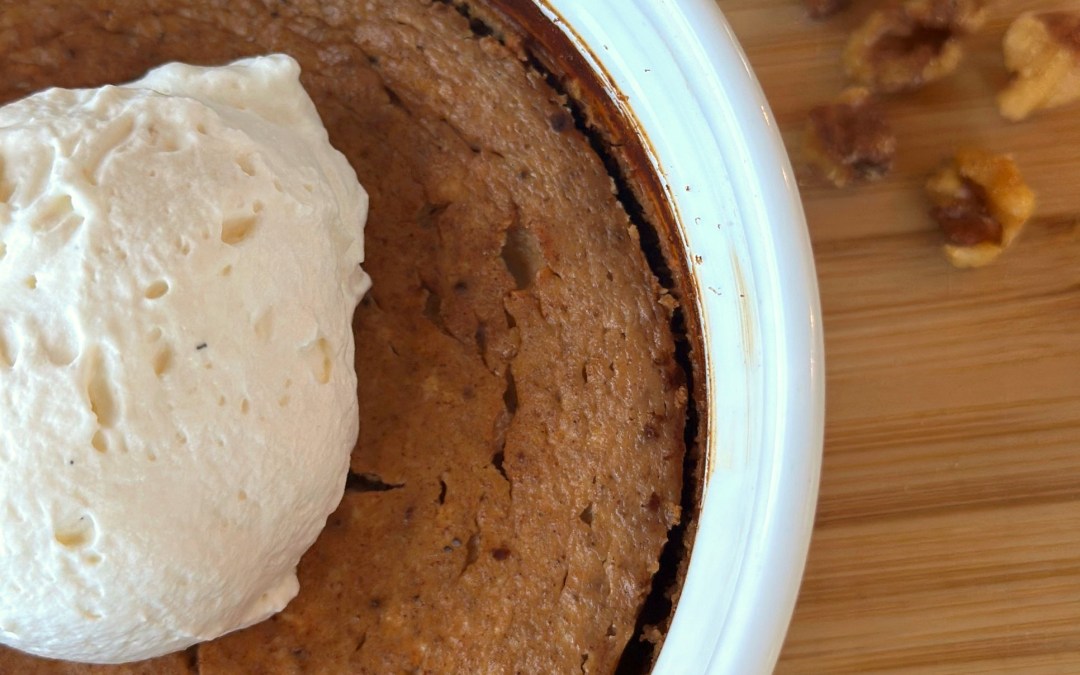
This high protein pumpkin cheesecake is the fall dessert I make when I want something cozy and creamy without the sugar crash an hour later. It’s made with cottage cheese, pumpkin, and one egg, baked in a single ramekin, and it tastes like the middle of a pumpkin pie met a classic New York cheesecake.
If you’ve been seeing cottage cheese desserts all over your feed and wondering if they’re actually good, this high protein pumpkin cheesecake is the one to try first. It takes about five minutes to blend, bakes while you finish dinner, and gives you a real dessert that also happens to pull its weight nutritionally. If you’re looking for the perfect size ramekin, these ones are great from Target!
Why I Love This High Protein Pumpkin Cheesecake
As a mom of two, my evenings are full. By the time the kids are in bed, I want a treat that feels special, but I don’t want to bake a whole cheesecake, slice it, and then stare at it in the fridge all week.
This recipe solves all of that. It’s portioned for one (or two if you’re sharing), it uses ingredients I almost always have on hand, and there’s no crust to fuss with.
Here’s what makes it a keeper for me:
- It’s genuinely creamy. Blended cottage cheese turns silky and smooth, so you get that classic cheesecake texture.
- It’s simple. Six main ingredients, one blender, one ramekin.
- It fits real life. You can make it tonight and eat it tomorrow, which is perfect for busy weeks.
- It tastes like fall. Pumpkin pie spice and vanilla do all the heavy lifting.
I also love that a high protein pumpkin cheesecake doesn’t feel like a “diet” dessert. It feels like dessert, period. That matters, because food you actually enjoy is food you’ll keep making.
High Protein Pumpkin Cheesecake Nutrition Benefits
I’m a functional nutritionist, so of course I have to nerd out a little here. Dessert doesn’t need to be “healthy” to earn a place in your life, but when it adds something good to your day, that’s a nice bonus.
Protein that keeps you satisfied
Between the cottage cheese and the egg, the whole ramekin has around 20 grams of protein. Protein helps you feel full and satisfied, and many women in their 30s and 40s fall short of what they need.
For a lot of my clients, adding protein to snacks and desserts is one of the easiest ways to close that gap without overhauling everything.
Fiber from real pumpkin
Pumpkin purée brings fiber, plus beta carotene, the plant pigment your body converts to vitamin A. Fiber feeds the beneficial bacteria in your gut and supports regular digestion. Read more about it here!
Steadier energy and blood sugar
Traditional cheesecake is mostly sugar, refined flour, and cream cheese, which can leave you feeling sluggish. Pairing carbs with protein and fiber, like this recipe does, can help support steadier blood sugar and energy, so you’re not raiding the pantry an hour later.
A note on gut health and hormones
Cottage cheese is a cultured dairy food, but baking reduces the live cultures, so I don’t count this as a probiotic food. The fiber is the gut-friendly win here.
On the hormone side, consistent protein and balanced blood sugar are two foundations I focus on with every client navigating perimenopause and beyond. This high protein pumpkin cheesecake is a small, delicious way to support both.
Ingredient Swaps and Tips for High Protein Pumpkin Cheesecake
This recipe is forgiving, but a few small details make a big difference.
Use the right cottage cheese
I use full fat (4%) cottage cheese because it bakes up creamier. Low fat works too, but the texture will be a little lighter. Look for a brand with a short ingredient list (ideally just cultured milk, cream, and salt).
Blend until completely smooth
This is the step that makes or breaks it. Blend for a full 60 seconds, or until you can’t see a single curd. Any curds left behind will bake up grainy.
Sweetener swaps
I use a granulated monk fruit blend that measures 1:1 like sugar. Maple syrup works if you prefer it (start with 1 1/2 tablespoons). If you use liquid stevia or pure monk fruit extract, you’ll need far less, so blend everything except the egg, taste, and adjust before adding the egg.
Want even more protein?
Blend in 1 tablespoon of unflavored or vanilla collagen or protein powder. If the batter gets very thick, add a splash of milk so it stays smooth and pourable.
Make sure it’s pumpkin purée
Grab 100% pumpkin purée, not pumpkin pie filling. Pie filling already has sugar and spices added, which throws off the whole recipe.
Toppings I love
- A spoonful of whipped cream (get my recipe here!) or whipped Greek yogurt
- A sprinkle of cinnamon or chopped toasted walnuts or pecans
- A crumble of graham cracker or granola for that “crust” crunch
How to Store and Meal Prep High Protein Pumpkin Cheesecake
This might be my favorite part. Because it needs to chill anyway, high protein pumpkin cheesecake is made for prepping ahead.
To store: Cover the cooled ramekin and keep it in the fridge for up to 3 days. Add toppings right before serving so they stay fresh.
To meal prep: Double or triple the batter and divide it among ramekins or small oven-safe jars. Bake them together on a sheet pan, and start checking a few minutes early, since smaller dishes bake faster. Now you have a ready-to-go dessert waiting on busy nights.
To freeze: Wrap it well and freeze for up to 1 month, then thaw overnight in the fridge. The texture gets slightly softer, but it still tastes great.
FAQ
Can I make high protein pumpkin cheesecake without a blender?
A blender or food processor is really the best tool here. Whisking by hand leaves cottage cheese curds, and the finished texture will be lumpy instead of creamy. A small personal blender works perfectly for a single batch.
Does it taste like cottage cheese?
Not at all once it’s blended and baked. The pumpkin, spice, and vanilla take over, and the cottage cheese just adds a gentle tang that reads as cheesecake.
How do I know when it’s done?
The edges should be set and the center should jiggle slightly, like a custard. Because it contains egg, it should reach 160°F in the center on an instant-read thermometer. It firms up more as it chills.
Is high protein pumpkin cheesecake good for breakfast?
It can be! With about 20 grams of protein, it makes a fun fall breakfast or afternoon snack. Pair it with fruit or a handful of nuts if you want it to be more filling.
Make It Tonight
If you’ve been looking for a fall treat that feels indulgent and still fits your goals, this high protein pumpkin cheesecake is it. It’s cozy, simple, and the kind of recipe you’ll want on repeat all season.
Give it a try, then come back and tell me how you topped yours. And if you love this high protein pumpkin cheesecake as much as I do, save it to Pinterest so it’s ready when the craving hits.
PrintHigh Protein Pumpkin Cheesecake
This high protein pumpkin cheesecake is a creamy, single-serve fall dessert made with blended cottage cheese, pumpkin, and warm spices. It has about 20 grams of protein and no crust required.
- Prep Time: 5min
- Cook Time: 30min
- Total Time: 35 minutes
- Category: Dessert
- Method: Baked
- Cuisine: American
Ingredients
- 1/2 cup full fat (4%) cottage cheese
- 1/4 cup 100% pumpkin purée (not pumpkin pie filling)
- 1 large egg, room temperature
- 1–2 tbsp granulated monk fruit sweetener (1:1 sugar replacement)
- 2 tsp pumpkin pie spice
- 1 tsp pure vanilla bean paste
- Pinch of salt
- Cooking spray or butter, for greasing
- Optional topping: whipped cream, whipped Greek yogurt, or chopped toasted pecans
Instructions
- Preheat oven to 350°F. Grease a 10 to 12 oz ramekin or oven-safe dish and set it on a small baking sheet.
- Add cottage cheese, pumpkin purée, sweetener, pumpkin pie spice, vanilla, and salt to a blender. Blend for 60 seconds, until completely smooth with no visible curds. Add the egg and pulse 5 to 10 seconds, just until combined.
- Pour batter into the ramekin and tap it gently on the counter to release air bubbles.
- Bake 25 to 30 minutes, until the edges are set, the center has a slight jiggle, and the center reaches 160°F on an instant-read thermometer.
- Cool on the counter for 30 to 60 minutes (no more than 2 hours), then cover and refrigerate at least 3 hours or overnight. Add toppings just before serving.
Notes
- Cottage cheese: Full fat gives the creamiest result. Low fat works but is slightly lighter in texture.
- Sweetener: Swap 1 1/2 tbsp maple syrup for the monk fruit. If using liquid stevia or pure monk fruit extract, use much less and taste before adding the egg.
- Extra protein: Blend in 1 tbsp collagen or vanilla protein powder, plus a splash of milk if the batter gets thick.
- Smaller dishes: Divide between two 6 oz ramekins and start checking at 18 minutes.
- Storage: Covered in the fridge up to 3 days. Freeze, wrapped well, up to 1 month and thaw overnight in the fridge.
- Avoid cracks: Don’t over-blend after adding the egg, and don’t overbake. For an extra-smooth top, bake the ramekin in a shallow pan of hot water.
Nutrition
- Serving Size: 225
- Fat: 10g
- Carbohydrates: 11g
- Fiber: 3g
- Protein: 20g